
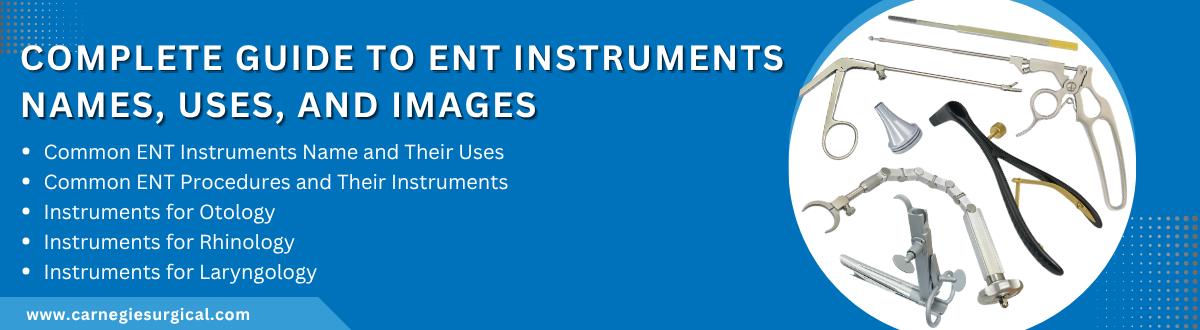
If you have ever visited an ENT specialist, you have probably noticed the range of small, precisely made tools lined up on the tray beside you. Each one serves a specific purpose, and together they allow doctors to examine and treat some of the most sensitive and delicate areas of the human body. Whether you are a medical student, a nurse, a surgical technician, or simply someone who wants to understand more about ear, nose, and throat care, this guide walks you through the most commonly used ENT instruments, what they are called, and exactly what they do.
What Are ENT Instruments?
ENT instruments are specialized medical tools designed for examining, diagnosing, and treating conditions related to the ear, nose, and throat. Doctors who work in this field, known as otolaryngologists or ENT specialists, rely on these instruments every day, both in clinic settings and in the operating theatre.
Because the ear canal, nasal passages, and throat are narrow, delicate, and difficult to access with standard tools, ENT instruments are engineered with precision in mind. Most are made from high-grade surgical stainless steel, which allows them to be sterilized and reused reliably over many years without losing their function or sharpness.
Why These Instruments Matter
The ears, nose, and throat sit at the center of some of the body’s most important functions: hearing, breathing, speaking, and swallowing. When something goes wrong in these areas, the consequences can affect a person’s quality of life significantly.
Having the right instrument for the job means a doctor can examine a narrow ear canal without causing pain, remove a nasal polyp with minimal bleeding, or perform a tonsillectomy with clear visibility and control. Without specialized tools, even experienced surgeons would struggle to deliver safe, effective care in these confined spaces.
Common ENT Instruments Name and Their Uses
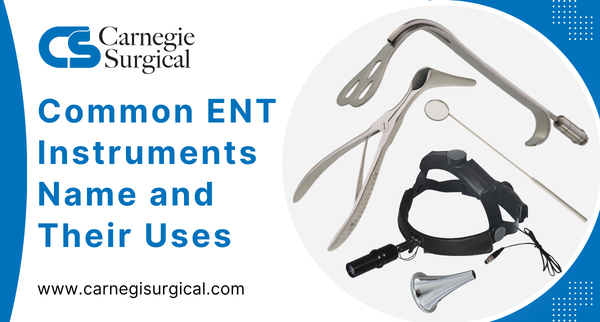
ENT doctors use a wide range of specialized instruments to examine and treat conditions related to the ear, nose, and throat. Each instrument is designed for a specific purpose, helping doctors work with precision and care in very small and sensitive areas of the body. From basic examination tools to more advanced surgical instruments, these tools play an important role in accurate diagnosis and effective treatment. Below are some of the most commonly used ENT instruments along with their names and uses:
1. Head Mirror
The head mirror is one of the most basic ENT instruments. Doctors wear this mirror on their head to reflect light into the ear, nose, or throat during examination. This simple tool has been used for many years and is still very useful today.
2. Aural Speculum (Ear Speculum)
This is a small, funnel-shaped instrument used to look inside the ear canal. It comes in different sizes to fit adults and children. Doctors use it to check the ear drum and see if there is any infection or wax buildup.
3. Nasal Speculum
The nasal speculum helps doctors open the nostrils to see inside the nose. There are two main types:
- Short-bladed nasal speculum – Used for quick nose examinations
- Long-bladed nasal speculum – Used during nose surgeries
4. Laryngeal Mirror
This small mirror on a long handle helps doctors see the voice box (larynx) and vocal cords. The doctor places it in the back of the throat to get a clear view without causing discomfort.
5. Tongue Depressor
Tongue depressors come in three types: wooden, straight metallic, and curved metallic. They push down the tongue so doctors can see the throat and tonsils clearly.
Instruments for Ear (Otology Instruments)
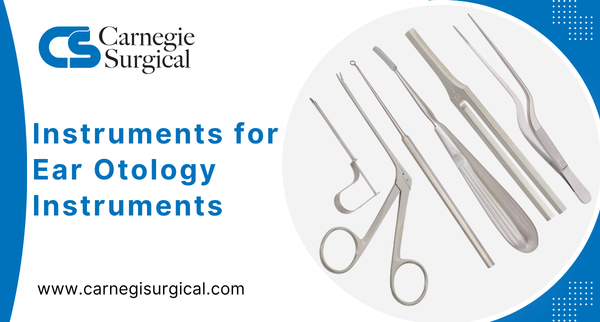
Working with the ear requires very precise tools because the ear canal is narrow and the structures inside are delicate. Here are the main ENT instruments for ear procedures:
Forceps
- Hartmann Forceps: Long and thin forceps used to remove foreign objects from the ear or hold tissue during ear surgery
- Lucae Ear Dressing Forceps: Delicate forceps with serrated tips used for middle ear procedures
- Alligator Forceps: Small forceps that look like an alligator’s mouth, perfect for grabbing small objects in the ear
Curettes
- Buck Ear Curette: Used to clean ear wax gently
- Shapleigh Ear Curette: Helps remove wax and debris from the ear canal
Elevators
These instruments lift tissue during ear surgery. Common ones include:
- Lempert Elevator
- Freer Elevator
- House Elevator
Mastoid Drill
A powered surgical drill used during mastoidectomy to carefully remove infected or damaged bone from the mastoid area behind the ear. It comes with different-sized burrs (drill tips) to allow the surgeon to work with precision around delicate structures such as the facial nerve and inner ear.
Tuning Fork
Though simple, the tuning fork is an important tool for testing hearing. Doctors use it to check if hearing loss is coming from the ear canal, ear drum, or inner ear.
Myringotome
A small, sharp surgical knife used to make a precise incision in the eardrum during a procedure called myringotomy. This incision helps drain fluid from the middle ear and is one of the most commonly performed ENT procedures, especially in children with recurrent ear infections.
Ventilation Tubes / Grommets
Ventilation Tubes (Grommets) Small tubes inserted into the eardrum after myringotomy to keep the opening patent and allow continuous drainage of fluid from the middle ear. They are commonly used in children with chronic middle ear fluid and help restore normal hearing.
Instruments for Nose (Rhinology) Instruments)
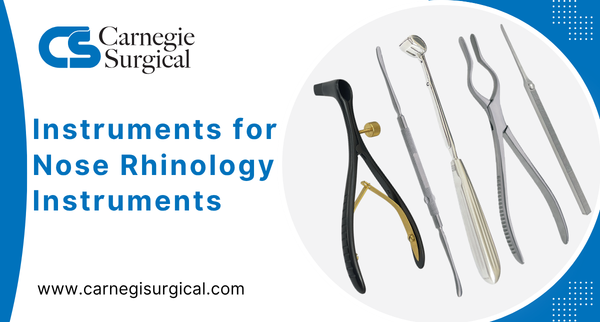
Rhinology instruments are specially designed for procedures involving the nose, which has a complex structure of bone, cartilage, and soft tissue. ENT doctors use these instruments to perform both simple examinations and advanced surgical procedures with accuracy and care. Because the nasal area is delicate and narrow, these tools help ensure precise handling, minimal damage, and effective treatment during nose-related surgeries.
Nasal Scissors
- Knight Nasal Scissors: Sharp scissors designed to cut nasal tissue during surgery
- Used in procedures like septoplasty and turbinectomy
Nasal Forceps
- Gruenwald Nasal Dressing Forceps: Used to pack gauze in the nose after surgery
- Luc’s Forceps: Help remove bone and tissue during nasal procedures
- Walsham’s Forceps: Used to fix broken nose bones
Killian Nasal Speculum
One of the most widely used nasal speculums in clinical practice. It has long blades that open wider than a standard nasal speculum, making it ideal for detailed nasal examinations and surgical procedures such as septoplasty. Its long blades provide better visibility and access deep inside the nasal cavity.
Elevators and Dissectors
- Freer Elevator: Lifts the lining of the nose away from cartilage and bone
- Cottle Septum Elevator: Used specifically for nasal septum surgery
- Septal Dissector: Helps separate tissues during septoplasty
Chisels and Osteotomes
These surgical instruments are used to cut, shape, and reposition bone during procedures such as nose and facial surgery. Osteotomes have a beveled edge for more precise bone cuts, while chisels are used for heavier bone removal and reshaping.
Nasal Snare
Used to remove nasal polyps (growths in the nose). The wire loop wraps around the polyp and cuts it off.
Instruments for Throat (Laryngology Instruments)
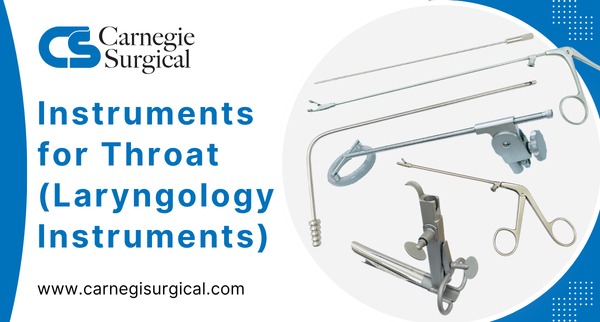
Laryngology instruments are used for examining and treating conditions related to the throat, including the tonsils, vocal cords, and surrounding tissues. These procedures often require specialized tools to provide clear visibility and precise control in a sensitive area. From holding the mouth open to removing tonsils or adenoids, each instrument plays an important role in ensuring safe and effective throat surgeries.
Boyle-Davis Mouth Gag
This instrument is used to hold the mouth wide open during throat and tonsil surgeries. It consists of a metal frame with a tongue blade that keeps the mouth open and the tongue depressed, giving the surgeon clear access to the throat. It comes with different-sized tongue blades to fit both children and adults.
Instruments for Laryngology
These specialized tools are used to examine, diagnose, and treat conditions of the larynx and throat. They allow surgeons to perform precise procedures on delicate airway structures.
Tonsil Instruments
- Tonsil Holding Forceps: Grab and hold the tonsil during removal
- Tonsillar Artery Forceps: Clamp blood vessels to stop bleeding (available in straight and curved versions)
- Tonsillar Scissors: Cut the tonsil tissue
- Tonsillar Dissector: Separate the tonsil from surrounding tissue
- Tonsillar Snare: Wire loop that wraps around the tonsil base to remove it
Adenoid Curette
Adenoid Curette (St. Clair Thompson) A spoon-shaped surgical instrument used to scrape and remove adenoid tissue from the back of the nasal passage. It is specially designed to fit the curve of the nasopharynx and is widely used in adenoidectomy procedures, particularly in children suffering from nasal obstruction and recurrent infections.
Operating Laryngoscopes
These instruments are used to directly view and access the larynx during surgery. They hold the airway open, allowing surgeons to perform precise procedures on the vocal cords and surrounding structures.
Surgical Instruments Used in ENT
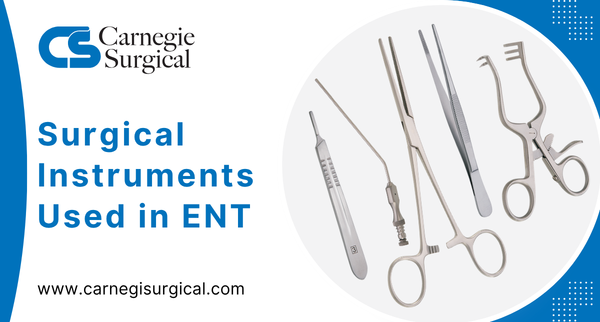
In addition to specialized ENT tools, many general surgical instruments are also widely used in ear, nose, and throat procedures. These instruments assist surgeons in performing tasks such as cutting, holding, clamping, and maintaining a clear surgical field. They are essential for ensuring precision, safety, and efficiency during both minor and major ENT surgeries.
Scalpel Handle
Holds surgical blades for making incisions. Available in different sizes (#3 is commonly used in ENT).
Forceps for Holding Tissue
- Adson Tissue Forceps: Small forceps with tiny teeth for holding delicate tissue
- Mosquito Forceps: Very small forceps used to clamp tiny blood vessels
- Kocher Forceps: Stronger forceps for holding tougher tissue
Suction Tubes
Remove blood and fluids during surgery to keep the area clean. Common types include:
- Ferguson-Frazier Suction Tube
- Yankauer Suction Tube
- Baron Suction Tube
Retractors
Hold tissues and skin apart so doctors can see the surgical area better.
Common ENT Procedures and Their Instruments
ENT procedures vary from simple treatments to complex surgeries, and each procedure requires a specific set of instruments to ensure accuracy and patient safety. These instruments are carefully selected based on the area being treated and the type of surgery being performed. Below, we have listed common ENT procedures along with the instruments used in each procedure and their specific uses, to help you better understand their importance in medical practice.
Tympanoplasty (Ear Drum Repair)
Uses micro instruments like ear forceps, elevators, and special scissors to repair holes in the ear drum.
Mastoidectomy (Ear Bone Surgery)
Requires mastoid curettes, drills, and suction elevators to remove infected bone behind the ear.
Septoplasty (Nasal Septum Surgery)
Uses septal elevators, nasal scissors, and speculums to straighten the wall between the nostrils.
Tonsillectomy (Tonsil Removal)
Requires a complete tonsillectomy set including mouth gag, holding forceps, dissectors, and snares.
Functional Endoscopic Sinus Surgery (FESS)
Uses specialized endoscopic instruments with cameras to open blocked sinuses.
Tracheostomy (Windpipe Opening)
Requires scalpels, retractors, tracheal dilators, and special tracheostomy tubes.
Tips for Healthcare Professionals
If you work with ENT instruments or are building your own ENT practice, a little attention to the right habits can make a big difference. Start with good quality instruments. It might be tempting to cut costs, but cheap tools often lack the precision you need for such detailed work, and that can create problems down the line.
Keeping your instruments clean is non-negotiable. Always sterilize them properly between patients, as even the smallest oversight can lead to serious infections. Along with that, make it a habit to inspect your instruments regularly. Look for rust, dull edges, or any signs of wear, and get them repaired or replaced before they become a problem during a procedure.
When it comes to storage, keep everything in proper trays or cases. It protects the instruments and saves you the stress of searching for something right before a procedure. It also helps to truly know your tools, not just how to use them, but their correct names as well. Clear communication in the operating room matters, and knowing your instruments well makes that much easier.
Lastly, think about putting together sets of instruments based on the procedures you do most often. It simplifies your preparation process and helps everything run more smoothly when you are in the middle of a busy day.
Frequently Asked Questions About ENT Instruments
How many instruments are in a basic ENT set?
A basic ENT surgical set typically contains 20-30 instruments, including various forceps, scissors, speculums, elevators, and suction tubes.
Can ENT instruments be reused?
Yes, most ENT instruments are designed to be reused after proper sterilization. They are made from materials that can withstand repeated cleaning and heat sterilization.
What is the difference between ear instruments and nose instruments?
Ear instruments are usually longer and more delicate because they need to reach deep into the narrow ear canal. Nose instruments are often stronger because they need to work with bone and firmer tissue.
Why are ENT instruments so expensive?
Quality ENT instruments are precisely manufactured from special medical-grade steel. They require expert craftsmanship to ensure they work correctly in delicate procedures. The manufacturing process, often done in Germany, follows strict medical standards.
Where can hospitals buy ENT instruments?
Hospitals can purchase ENT instruments from specialized surgical instrument manufacturers. Carnegie Surgical LLC is one such trusted manufacturer, offering a wide range of high-quality ENT instruments and complete surgical sets for hospitals and healthcare professionals worldwide.
Conclusion
ENT instruments are essential tools that help doctors examine and treat problems in the ear, nose, and throat. From simple tools like the head mirror and tongue depressor to complex surgical instruments used in delicate procedures, each tool has a specific purpose.
Understanding the names and uses of these instruments is important for medical students, ENT doctors, nurses, and surgical technicians. Whether you’re looking for information about basic examination tools or complete surgical sets, knowing how these instruments work helps ensure better patient care.
Modern ENT instruments combine traditional designs with high-quality materials to provide doctors with the precision they need. As medical technology continues to advance, these instruments remain fundamental to the practice of otolaryngology, helping millions of patients get relief from ear, nose, and throat problems every year.
Disclaimer: This article is provided for educational purposes only and does not constitute legal or medical advice. Any medical procedures mentioned should only be performed by qualified healthcare professionals. Always consult a licensed ENT specialist or other qualified healthcare provider regarding any ear, nose, or throat condition, diagnosis, or treatment.

