
When we talk about surgical instruments, holding and clamping tools hold a special importance in the surgical category due to their specific specialization. These instruments act as an extension of the doctors’ and surgeons’ hands during various medical procedures, making it much easier for them to complete those procedures efficiently.
If you are a doctor or surgeon, then this information will be very useful and beneficial for you, because today we will be discussing both tools, needle holders and hemostats, in detail.
Needle holders are specifically used to grasp and guide suturing needles, especially during the closure of incisions or wounds, to ensure that the stitching is accurate and secure.
And if we talk about hemostats, they are very important for clamping blood vessels and controlling bleeding during surgery.
Both instruments are available in various sizes and configurations to meet the specific requirements of different surgical procedures. They are mostly made from German stainless steel, which is known worldwide for its durability, rust-proof quality, and high precision standards.
Now, to understand the unique functions and differences between needle holders and hemostats, be sure to read the detailed comparison below.
Hemostat vs Needle Driver
There are several important factors to consider when comparing these two instruments, including their uses, structures, types, and more. Let’s examine each aspect of the comparison between needle holders and hemostats, starting with their intended purposes and uses.
Use of Needle Holder
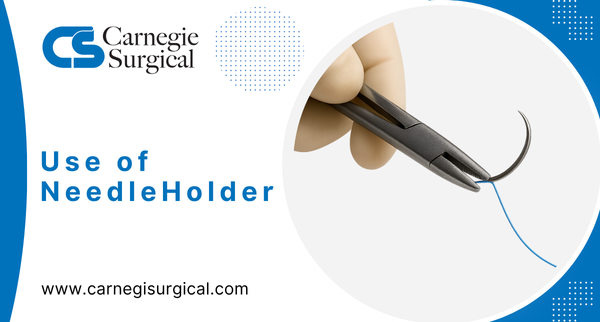
Surgeons make incisions and perform dissections to perform surgeries on internal organs. After completing the procedure, they need to stitch the wounds and incisions to ensure proper healing of the surgical area. Suturing needles assist in closing skin incisions and wounds, but to handle and drive these needles, surgeons use needle holders (also known as needle drivers or needle forceps).
These specialized instruments feature an ergonomic design that allows for a firm and precise grip on the suturing needle during the stitching process.
Therefore, needle drivers are essential for holding and guiding suturing needles, helping to close wounds and incisions effectively and prevent post-operative complications.
Use of Hemostat
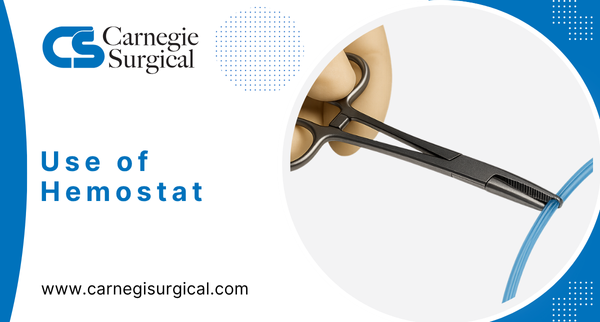
During surgery, veins and arteries might be accidentally damaged or purposely cut as part of the procedure. This can lead to serious blood loss if not controlled quickly. To stop the bleeding, doctors use a special tool called a hemostat. It gently but firmly clamps the blood vessels to prevent blood from leaking out.
Hemostat forceps are very helpful for managing blood flow during surgery. They allow surgeons to control or stop the flow of blood in veins and arteries, depending on what the procedure requires. This helps keep the area clean and safe while the surgery continues.
Different Structural Features of Hemostat and Needle Driver
While hemostats and needle drivers may look quite similar, their structure and purpose are slightly different. The biggest difference lies in their jaw design.
Hemostats have long, narrow jaws with fine serrations or teeth that help grip blood vessels securely without causing damage. Their design allows surgeons to control bleeding by clamping the vessels gently but firmly.
Needle drivers (also called needle holders), on the other hand, have shorter, thicker jaws. These jaws have shallow grooves or teeth that are specially designed to hold suturing needles in place during stitching. This prevents the needle from slipping while the surgeon sews tissue together.
Common Structural Features
Despite their differences, hemostats and needle holders share several structural traits. Both usually have ring-shaped handles for the fingers and a ratchet-lock mechanism to keep the jaws closed without continuous pressure. They also feature serrations or textured patterns on the jaws to improve grip.
Because of their similar appearance, it can sometimes be hard to tell them apart. However, the jaw shape and function make a clear difference. Hemostats are used mainly for clamping blood vessels, while needle drivers are made for holding needles during suturing.
Different Types of Hemostats and Needle Holders
Hemostats and needle holders come in a variety of sizes and designs, each made for a specific purpose in surgery. What mainly sets them apart is the shape and pattern of their jaws, which are tailored to different surgical tasks. While most of these tools have the classic ring-style handles for finger placement, some versions are designed with hand grips similar to thumb forceps for more precise control.
Let’s take a closer look at the different types of needle holders and hemostats and how each one is used in surgical procedures.
Types of Needle Drivers (Needle Holders)
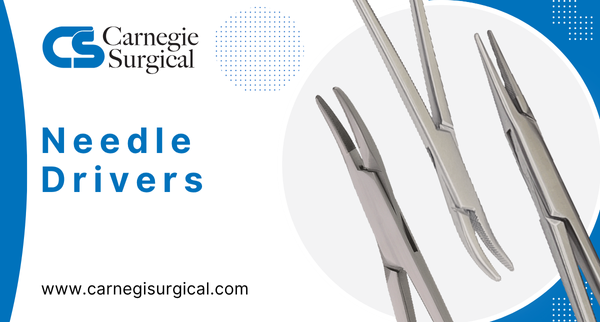
Needle drivers, also known as needle holders, are available in various sizes and designs to meet the different needs of surgical procedures. Surgeons often use specific types depending on the nature of the operation and the size of the suturing needle. Some needle holders are versatile and can be used across multiple procedures.
Here are some commonly used types of needle holders:
| Needle Holder Name | Design Features | Primary Use | Common Procedures |
|---|---|---|---|
| Olsen-Hegar | Combined with scissors; ring handles; ratchet lock | Holding needles and cutting sutures | General surgery, skin closure |
| Mathieu | Spring handle; ratchet at base; curved jaws | Long and complex sutures | Plastic surgery, dental, pediatric surgery |
| Mayo-Hegar | Broad, cross-serrated jaws; optional tungsten inserts | Holding curved needles | General and gynecological surgery |
| Adson | Fine horizontal serrations; short jaws; ratchet lock | Small needle control | Ligature placement, minor tissue repair |
| Barraquer | Fine, curved jaws; spring handle; knurled grip | Delicate needle control | Ophthalmic and microsurgery |
| Baumgartner | Short, strong jaws; cross-serrations | Larger/thicker suturing needles | Suturing trunk and limb tissues |
| Blair-Brown | Ratcheted ring handles; fine jaws | Delicate suturing | Plastic surgery, ENT |
| Boynton | Serrated beaks; spring mechanism; ratchet lock | Needle holding during long surgeries | Reconstructive, long-duration surgeries |
| Castroviejo | Straight/curved jaws; micro-serrations; spring handle | Microsurgical precision | Eye, vascular, neurosurgery |
| Collier | Cross-serrated jaws; finger rings; ratchet lock | General suturing | Multiple procedures |
| Cooley | Thin shanks; delicate build; ratcheted | Fine vascular suturing | Cardiothoracic surgeries |
| Crile-Murray | Straight jaws; ring handles; balanced structure | Medium-sized needles | General and soft tissue surgeries |
| Cruciate | Short, serrated beaks; heavy-duty build | Large needles, strong grip | Orthopedic (ligament repair) |
| DeBakey | Long, thin shanks; tungsten carbide inserts | Deep and delicate suturing | Thoracic and abdominal surgeries |
| Heaney | Curved, serrated jaws; blunt points; optional tungsten inserts | Thick needle control | Gynecological and obstetric surgeries |
Each type of needle holder has its own unique structure and advantages. Some models like the Olsen Hegar combine additional features such as built-in scissors for cutting sutures, while others such as the Mathieu or Castroviejo are designed for specialized or microsurgical tasks.
In the following section, we will discuss five of the most commonly used needle holders in detail. This includes their design, main features, and specific surgical applications to help you understand how each instrument plays a vital role in different procedures.
1. Olsen-Hegar Needle Holder
Overview
The Olsen-Hegar needle holder is a dual-purpose surgical instrument that combines a needle-holding mechanism with built-in scissors. This allows surgeons to hold the suturing needle, drive it through tissue, and cut the suture thread without changing instruments.
Design Features
It has ring handles, a ratchet locking system for secure grip, and tungsten carbide (TC) inserts on the jaws for durability. The integrated scissors are placed just behind the jaws for easy cutting.
Common Uses
This instrument is mainly used in general surgery and skin closure. Its multifunctional design saves time and improves efficiency during suturing.
2. Mayo-Hegar Needle Holder
Overview
The Mayo-Hegar is one of the most widely used needle holders in general surgery. It is designed for holding curved needles firmly during suturing.
Design Features
It features broad, cross-serrated jaws with a strong ratchet mechanism. Many models include tungsten carbide inserts to enhance grip and reduce wear. The handles are ring-shaped for comfort and control.
Common Uses
Mayo-Hegar needle holders are ideal for general and gynecological surgeries where medium-to-large needles are used. Surgeons prefer it for its balance between strength and precision.
3. Castroviejo Needle Holder
Overview
The Castroviejo needle holder is a delicate instrument used for microsurgery requiring extreme precision, such as eye, vascular, or neurosurgery.
Design Features
It comes with straight or curved jaws, spring handles instead of ring handles, and micro-serrations for a secure but gentle grip. It is available in locking and non-locking models.
Common Uses
This instrument is commonly used in ophthalmic, vascular, and neurological procedures where delicate tissue handling and fine control are essential.
4. Mathieu Needle Holder
Overview
The Mathieu needle holder is designed for ease of use and quick handling during long suturing procedures.
Design Features
It has a spring-loaded handle that opens by squeezing and closes automatically, with a ratchet lock near the base. The curved jaws provide firm control over the needle.
Common Uses
It is widely used in plastic, dental, and pediatric surgeries where long or continuous sutures are required. Its ergonomic spring handle minimizes hand fatigue.
5. Barraquer Needle Holder
Overview
The Barraquer needle holder is a fine, lightweight instrument used for delicate suturing in microsurgery and ophthalmology.
Design Features
It has a spring handle and fine, curved jaws that allow precise manipulation of small needles. The knurled grip ensures non-slip control even in tight surgical fields.
Common Uses
Mostly used in eye surgery and other micro-procedures that demand high precision and minimal tissue trauma.
Types of Hemostatic Forceps
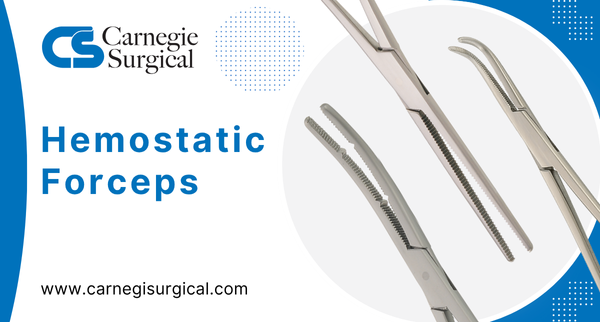
Hemostatic forceps come in various types, each designed to control bleeding by clamping blood vessels during surgery. These instruments differ in jaw size, shape, serration pattern, and overall length, allowing surgeons to choose the most suitable tool for specific tissues or surgical areas. From fine, delicate clamps for pediatric or ENT procedures to heavy-duty forceps for major surgeries, each type serves a unique and vital role in maintaining hemostasis.
Here are some commonly used types of hemostatic forceps:
| Hemostat Name | Design Features | Primary Use | Common Procedures |
|---|---|---|---|
| Adson Hemostatic Forceps | Long, slim jaws; horizontal serrations; curved/straight | Clamping small, delicate vessels | Tonsillectomy, ENT surgeries |
| Crile Hemostatic Forceps | Ratcheted handles; full jaw serrations; curved/straight | Grasping medium vessels/tissues before ligation | Laparotomy, general surgery |
| Mosquito Hemostatic Forceps | Fine, short jaws; ratchet lock; left-handed options | Clamping very small blood vessels | Minor surgeries, pediatric, hand procedures |
| Kelly Hemostatic Forceps | Long jaws; partial serrations; left-handed options | Clamping larger vessels and tissues | General and vascular surgeries |
| Hartman Hemostatic Forceps | Compact, fine jaws; multi-purpose; serrated | Clamping vessels and dissecting tissues | ENT, eye, minor skin procedures |
| Kocher Hemostatic Forceps | Toothed tips; strong horizontal serrations | Holding thick tissues and large vessels | Thyroid, gallbladder, bowel surgeries |
| Mixter Hemostatic Forceps | Angled/curved jaws; fully or half-serrated | Clamping deep vessels in hard-to-reach spaces | Hysterectomy, deep abdominal surgeries |
| Rochester-Ochsner Forceps | Large size; toothed, serrated jaws | Clamping major arteries or veins | Major abdominal, thoracic, orthopedic cases |
Each type of hemostatic forceps is designed with a particular purpose in mind. Some are fine and delicate for small or sensitive vessels, while others are strong and heavy for major surgeries involving thick tissues.
In the following section, we will discuss several commonly used hemostatic forceps in detail. This includes their structural features, main uses, and the types of surgeries where each instrument is most effective.
1. Adson Hemostatic Forceps
Overview
The Adson hemostatic forceps are fine, lightweight clamps designed for delicate tissue handling and precise hemostasis in smaller surgical fields. Their narrow build allows surgeons to operate effectively in confined or sensitive areas.
Design Features
These forceps feature long, slim jaws with horizontal serrations that run along the entire inner surface. They are available in both straight and curved designs, offering versatility based on the depth and angle of the surgical site.
Common Uses
Adson hemostatic forceps are frequently used in ENT (Ear, Nose, and Throat) surgeries and tonsillectomies, where delicate vessel control is essential. Their design makes them ideal for pediatric and microvascular procedures.
2. Crile Hemostatic Forceps
Overview
Crile hemostatic forceps are one of the most commonly used clamps in general surgery. They are designed to grasp and occlude medium-sized blood vessels before ligation or cauterization.
Design Features
They have ratcheted ring handles and serrations that extend along the entire jaw length, ensuring a firm grip. Available in both curved and straight versions, Crile forceps balance strength and precision.
Common Uses
These forceps are standard instruments in laparotomy and other general surgical procedures where controlling moderate bleeding is necessary.
3. Mosquito Hemostatic Forceps
Overview
Mosquito forceps are small, delicate clamps used for controlling bleeding from very fine blood vessels. Their name comes from their compact size and precision — similar to the light touch of a mosquito.
Design Features
They have fine, short jaws with full serrations and a secure ratchet lock mechanism. Some models are available in left-handed designs for surgeon comfort.
Common Uses
Mosquito forceps are widely used in minor surgical operations, pediatric procedures, and hand or plastic surgeries where delicate hemostasis is required without tissue trauma.
4. Kelly Hemostatic Forceps
Overview
Kelly forceps are larger than mosquito clamps and are designed for clamping moderate-to-large blood vessels or tissue bundles.
Design Features
Their jaws are partially serrated—the serrations typically cover the distal half of the jaws, while the proximal half remains smooth to reduce tissue damage. They are available in straight and curved patterns and often in left-handed options.
Common Uses
Kelly forceps are standard in general and vascular surgeries, providing reliable control over larger vessels and thicker tissues.
5. Hartman Hemostatic Forceps
Overview
Hartman forceps are small, multi-purpose clamps suitable for both clamping and gentle dissection. Their design offers precision without compromising control.
Design Features
They are compact with fine, serrated jaws that provide a steady grip. Their shorter length allows use in small or superficial surgical sites.
Common Uses
Hartman forceps are primarily used in ENT, ophthalmic, and minor skin surgeries, making them a popular choice for delicate procedures requiring accuracy.
Frequently Asked Questions
Q1: Can a hemostat be used instead of a needle driver?
It is not recommended. A hemostat does not hold needles securely and may cause slipping or tissue damage.
Q2: Why do some needle drivers have tungsten inserts?
Tungsten inserts improve grip, last longer, and reduce wear.
Q3: What is the difference between Kelly and Mosquito hemostats?
Mosquito hemostats are smaller and used for fine vessels, while Kelly hemostats are larger and used for bigger vessels.
Q4: Do both instruments have a locking system?
Yes. Both needle drivers and hemostats use a ratchet lock that keeps the jaws closed without constant pressure.
Q5: Which tool is more important in surgery?
Both are equally important. Hemostats help control bleeding, and needle drivers make sure wounds are stitched properly.
Final Thoughts
After exploring the differences between needle drivers and hemostats, it is clear that while they may look similar in design, they serve very different purposes in surgery.
Needle drivers, also known as needle holders or needle forceps, are specifically designed to hold and guide suturing needles during the closure of incisions and wounds. They provide the precision and grip needed for accurate stitching.
Hemostats, also referred to as hemostatic forceps, arterial forceps, or peans, are essential for clamping blood vessels to control bleeding during surgical procedures. Their main role is to achieve and maintain hemostasis.
In conclusion, both instruments are critical in the operating room. They support the surgical team in different but equally important ways, ensuring both effective wound closure and safe control of blood flow.

